
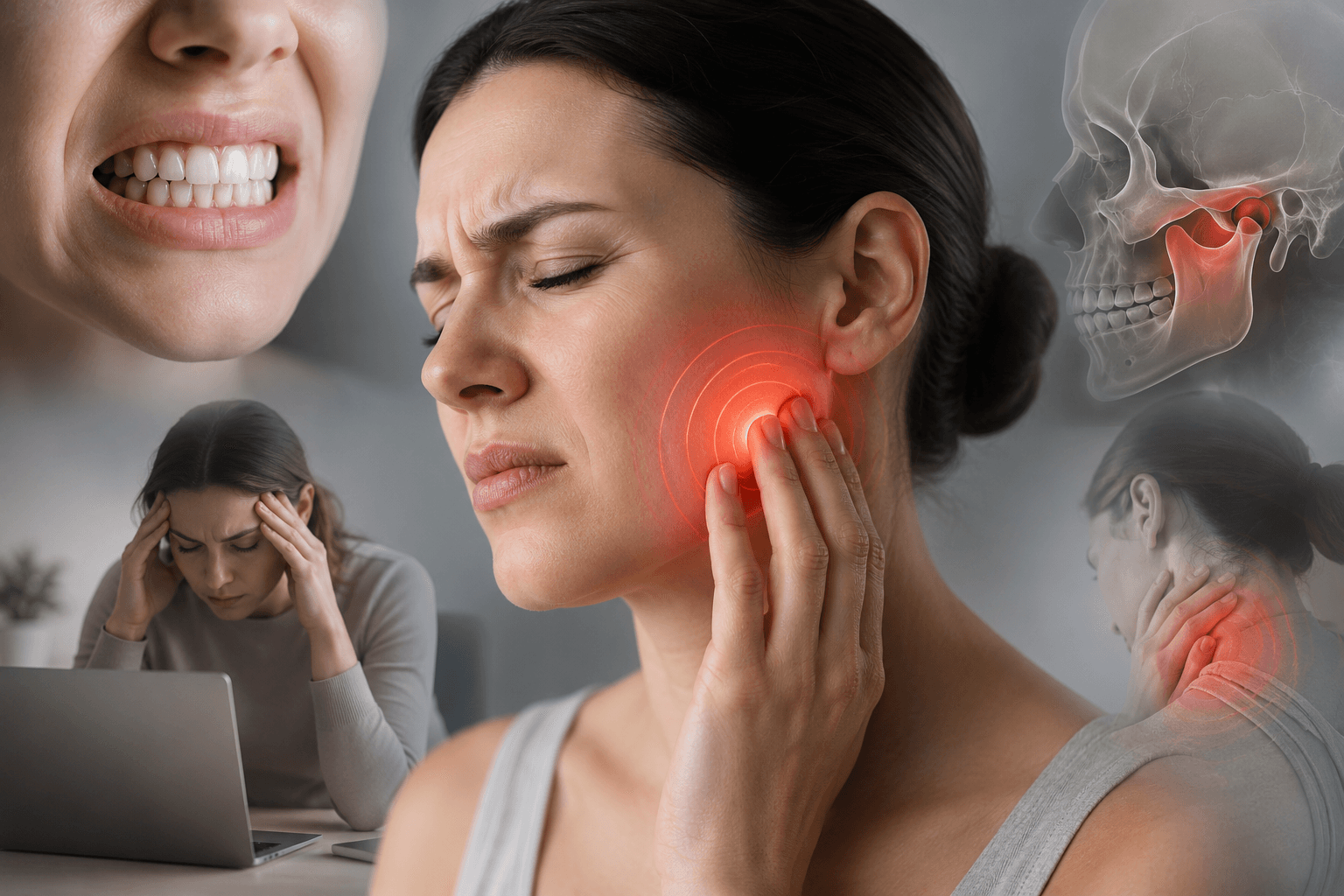
Many patients live with jaw tension for years without realising that it can be linked to stress and clenching.
It often develops gradually. You may notice tightness through the jaw after a stressful day, wake with headaches around the temples, or catch yourself clenching your teeth while concentrating. Others experience clicking within the jaw, soreness when chewing, or tension spreading into the neck and shoulders.
Some patients become so used to holding tension in their jaw that it starts to feel normal, until symptoms begin affecting daily life. Over time, repeated clenching can place significant strain on the muscles and joints of the face, leading to persistent tightness, headaches, jaw pain, and restricted movement.
This is where Clinical Buccal Therapy™ can help.
Clinical Buccal Therapy™ combines advanced intra-oral techniques with myofascial release, lymphatic drainage, acupressure, and photobiomodulation to help release built-up muscular tension. It is designed to improve jaw mobility, reduce facial tightness, and support patients experiencing stress-related jaw discomfort.
Why Does Stress Cause Jaw Clenching?
Stress affects the body physically as much as mentally. When we are stressed, the nervous system becomes more alert and muscles naturally begin to tighten. Some people carry this tension in their shoulders or neck. Others hold it in the jaw.
This can happen during the day through unconscious clenching, but many patients also grind or brace their jaw during sleep without realising.
Over time, this repeated strain can lead to symptoms such as:
- Tightness through the jaw, cheeks, and temples
- Jaw soreness, clicking, or difficulty opening the mouth comfortably
- Tension headaches and facial tenderness
- Tooth sensitivity from grinding, alongside neck and shoulder tension
Stress does not always cause TMJ problems on its own, but it is often one of the biggest factors that worsens symptoms.
Can Clenching Cause TMJ Disorder?
The temporomandibular joint, known as the TMJ, is the joint that connects the jaw to the skull. It works alongside a complex network of muscles and soft tissues that allow the jaw to move smoothly.
When the jaw is constantly clenching or grinding, these structures can become irritated and overworked. The surrounding muscles may tighten further, creating a cycle of tension and discomfort.
Patients often describe symptoms such as:
- Jaw clicking or popping
- Pain when chewing
- Facial pressure or tightness
- Limited jaw opening
- Headaches around the temples
- Discomfort near the ears
In more advanced cases, ongoing clenching can also contribute to inflammation around the joint itself and increasing restriction through the face and jaw. This is one reason many patients feel temporary relief from mouth guards or painkillers, but find the tension keeps returning afterwards.
Why Does Jaw Pain Often Feel Worse During Stressful Periods?
Many patients notice their symptoms become worse during busy or emotionally demanding periods. Poor sleep, anxiety, work stress, long hours at a desk, or even prolonged concentration can all increase clenching behaviour.
Once the muscles of the face become chronically tight, they can stay overactive even after the stressful period has passed. This is why some patients continue experiencing jaw pain, headaches, or facial tension long after they feel mentally calmer.
What Is Clinical Buccal Therapy™?
Clinical Buccal Therapy™ is a clinically informed facial therapy designed to address the muscular and soft tissue components of TMJ disorder and facial tension.
The treatment combines several advanced approaches into one structured protocol, including:
- Clinical intra-oral (buccal) therapy
- Myofascial release
- Lymphatic activation and drainage
- Targeted acupressure
- Photobiomodulation using medical-grade laser technology
- Structural facial rebalancing
Unlike superficial facial massage, this treatment works directly with the deeper muscular structures associated with jaw dysfunction and chronic facial tension.
The focus is not simply relaxation. Treatment is designed to help reduce muscular overactivity, improve jaw movement, ease tension patterns, and support recovery within irritated soft tissues.
How Can Clinical Buccal Therapy™ Help Jaw Pain?
Clinical Buccal Therapy™ combines advanced intra-oral Clinical Buccal Therapy™ with myofascial release and photobiomodulation to target the deeper muscular tension often associated with clenching and jaw pain.
Using intra-oral techniques, practitioners are able to work directly with muscles inside the cheeks and jaw that cannot be effectively accessed externally alone. This can be particularly beneficial for patients with chronic clenching patterns, where tension has gradually built up over many years.
Alongside manual therapy, photobiomodulation using a medical-grade laser device helps calm inflammation and support tissue recovery, particularly where the jaw joints and surrounding tissues have become irritated from ongoing muscular strain.
Patients often notice improvements in:
- Jaw tightness and facial tension
- Jaw movement and flexibility
- Pressure through the temples
- Tension headaches and jaw fatigue
For milder cases, one or two treatments may significantly reduce built-up tension. Where symptoms are more established, treatment usually works best as a short course, with many patients beginning to notice deeper release after around three sessions.
In more advanced cases, we would normally combine multiple elements of treatment together rather than relying on one technique alone.
Can Clinical Buccal Therapy™ Be Combined With Dental Treatment?
Yes, and in many cases this provides the most effective long-term approach.
Clinical Buccal Therapy™ is delivered in partnership with dental practices because muscular tension and dental health are often closely connected. Many patients experiencing jaw pain or clenching are not only dealing with tight muscles, but also the effects that ongoing strain places on the teeth, bite, and jaw joints over time.
Depending on your symptoms, the therapy may be combined alongside dental treatments such as:
- Night guards or occlusal splints for grinding and bruxism
- Restorative dental treatment where tooth wear has developed
- Bite assessments where jaw imbalance may be contributing to symptoms
- TMJ-focused dental management for jaw clicking or restriction
- Ongoing dental monitoring in patients with chronic grinding patterns
Many patients who have already tried mouth guards or dental treatment still experience ongoing tightness through the jaw and face. This is because protecting the teeth is only one part of the picture. The muscular tension driving the clenching behaviour may still be present.
Combining the therapy with dental management can therefore provide a more complete and supportive approach.
Frequently Asked Questions
Can stress really cause jaw pain?
Yes. Stress commonly contributes to jaw clenching and muscular overactivity, which can lead to facial tension, headaches, TMJ discomfort, and jaw pain over time.
Does Clinical Buccal Therapy™ hurt?
Most patients describe the treatment as intense in tighter areas but ultimately relieving. Areas with longstanding tension may feel tender initially, particularly during intra-oral work.
How many Clinical Buccal Therapy™ sessions are usually needed?
This depends on symptom severity and how long the tension has been present. Mild cases may improve quickly, while more established clenching patterns often benefit from a short course of treatment.
Can Clinical Buccal Therapy™ help headaches?
For patients whose headaches are linked to jaw tension and muscular tightness, treatment may help reduce associated pressure and strain.
Can Clinical Buccal Therapy™ help teeth grinding?
It may help reduce muscular tension associated with grinding and clenching. However, dental assessment remains important where tooth wear or bite-related issues are present.
Book a Consultation
Clinical Buccal Therapy™ is available at partner dental practices across the country for patients experiencing jaw tension, clenching, TMJ discomfort, headaches, and facial tightness linked to stress and muscular overactivity.
If jaw pain, facial tension, or teeth grinding are starting to affect your comfort, sleep, or daily life, early treatment can help prevent symptoms from becoming more established over time. Booking an assessment allows your practitioner to identify the underlying muscular tension patterns contributing to your symptoms and create a treatment plan tailored to your needs.
