
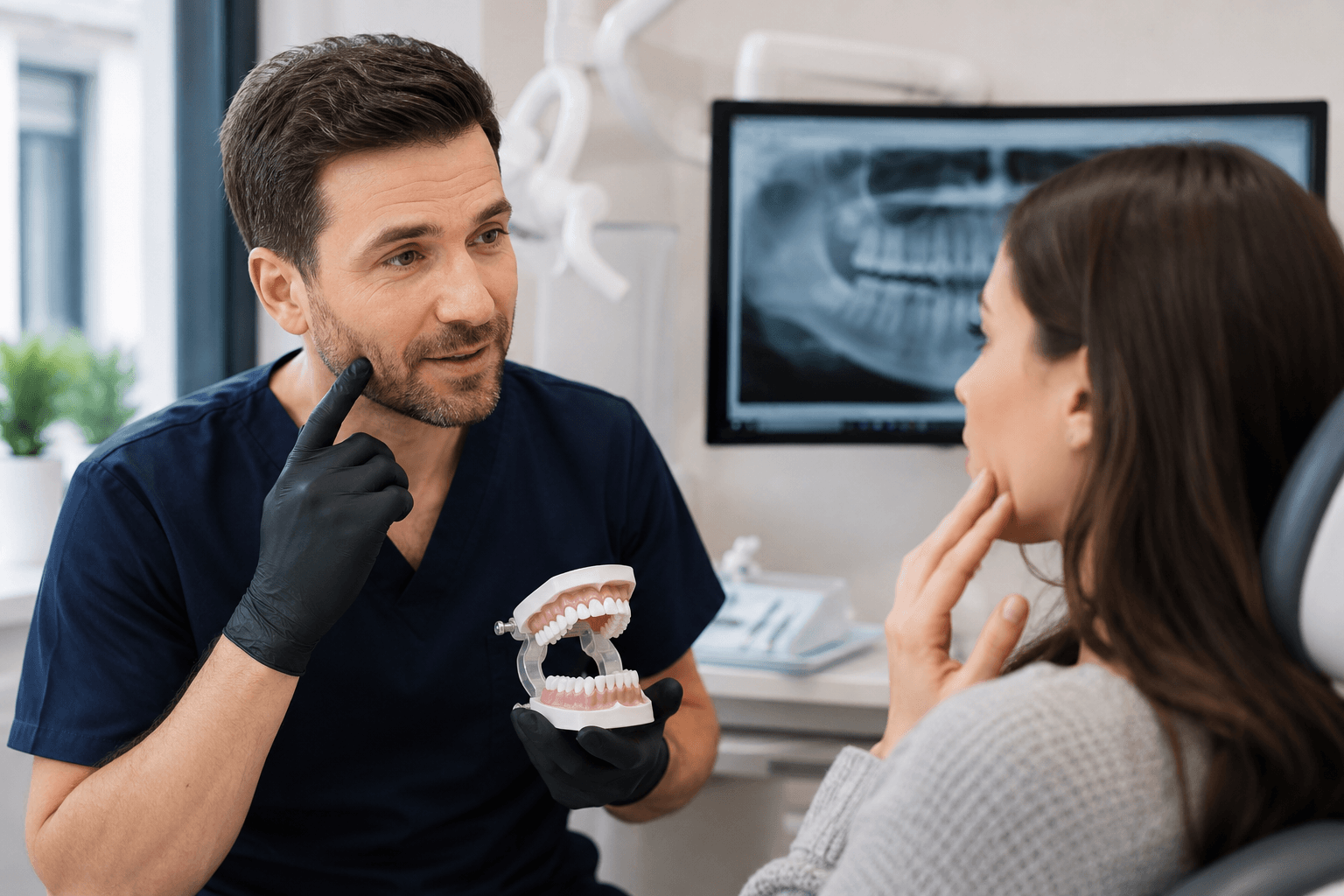
Many patients experience ongoing tooth pain even though nothing obvious appears clinically wrong. The X-rays may look stable, the tooth may not show clear signs of decay or infection, and previous dental treatment may have been successful. Yet the patient still describes aching, pressure, sensitivity, headaches, facial tension, or pain when chewing.
More dentists are recognising that these symptoms are not always coming directly from the teeth themselves. Chronic clenching, grinding, TMJ dysfunction, and tight jaw muscles can all create pain patterns that closely mimic toothache, with discomfort often spreading into the teeth, cheeks, temples, and jaw joints. Identifying when pain may be muscular rather than purely dental can help patients access more appropriate treatment and avoid unnecessary dental procedures.
Can Muscular Tension Cause Tooth Pain?
The muscles responsible for chewing and jaw movement are closely connected to the teeth, jaw joints, temples, cheeks, neck, and facial structures. When these muscles become chronically tight or overactive, they can create pain patterns that feel remarkably similar to dental pain.
Patients often describe:
- A dull aching tooth
- Pressure around the molars
- Sensitivity when biting
- Pain that seems to “move”
- Facial heaviness
- Tension around the temples or cheeks
- Jaw fatigue
- Headaches that worsen throughout the day
A common mistake patients make is assuming all tooth pain must come directly from the tooth itself. In reality, muscular referral patterns can mimic pulpitis, cracked teeth, sinus pain, or general dental discomfort surprisingly closely. This is particularly common in patients who clench or grind their teeth, often without realising they are doing it.
When Can Tooth Pain Be Muscular Rather Than Dental?
There is rarely one single sign. More often, it is the overall pattern of symptoms that suggests a muscular cause may be contributing.
The Pain Is Difficult to Pinpoint
True dental pain is often easier to isolate to one tooth or area.
Muscular pain tends to feel broader or more difficult to pinpoint accurately. Some patients describe aching across the whole side of the face rather than one specific tooth, while others notice the pain seems to move around over time.
Symptoms Change Throughout the Day
Pain linked to muscular tension often worsens during stressful periods, long workdays, poor sleep, or prolonged concentration.
Many patients notice symptoms are worse in the morning after overnight grinding, or later in the day after holding tension in the jaw for hours.
Multiple Teeth Feel Sensitive
When several teeth become sore at the same time without a clear dental cause, muscle tension and clenching are often contributing factors. Constant clenching places repeated pressure on the teeth, jaw muscles, and supporting ligaments, which can leave the teeth feeling tender or sensitive even when there is no obvious decay or infection.
Because the discomfort genuinely feels like toothache, many patients assume the pain must be coming directly from the teeth themselves.
The Jaw Feels Tight or Tender
Patients with muscular pain often also notice:
- Tightness through the cheeks
- Tension around the temples
- Difficulty relaxing the jaw
- Clicking or popping within the TMJ
- Jaw fatigue when chewing
- Limited jaw opening
- Tenderness around the jaw muscles
Many patients become so used to holding tension in the jaw that they stop recognising it until symptoms become more severe.
Dental Treatment Has Not Fully Resolved Symptoms
One of the clearest signs is ongoing discomfort despite appropriate dental treatment. This does not mean the original treatment was incorrect, as dental and muscular issues often exist together.
For example, a patient may initially have had genuine dental irritation, but ongoing clenching continues to overload the surrounding muscles and ligaments long after the tooth itself has settled.
What Is Clinical Buccal Therapy™?
Clinical Buccal Therapy™ is a clinically informed facial therapy designed to address the muscular and soft tissue components of TMJ disorder and facial tension.
The treatment combines several advanced approaches into one structured protocol, including:
- Clinical intra-oral (buccal) therapy
- Myofascial release
- Lymphatic activation and drainage
- Targeted acupressure
- Photobiomodulation using medical-grade laser technology
- Structural facial rebalancing
Unlike superficial facial massage, this treatment works directly with the deeper muscular structures associated with jaw dysfunction and chronic facial tension.
How Does Clinical Buccal Therapy™ Help Patients With TMJ and Muscular Tooth Pain?
The therapy is designed to help reduce muscular hyperactivity, improve jaw mobility, decrease tension loading through the face, and support tissue recovery around the TMJ and surrounding structures.
It can benefit patients who are suffering from:
- Jaw tightness
- Facial pressure
- Clenching-related discomfort
- Headaches
- Jaw mobility
- Chewing fatigue
- Temple tension
- Facial heaviness
For milder cases, one or two sessions may help release significant built-up tension. In patients with more established TMJ dysfunction or chronic bruxism, we would normally look at a short course of treatment combined with ongoing dental management where appropriate.
Why Dentists Are Increasingly Referring for Clinical Buccal Therapy™
As awareness around TMJ dysfunction and muscular facial pain grows, more dentists are recognising the role soft tissue dysfunction can play in persistent symptoms.
Referring patients earlier may help:
- Reduce unnecessary treatment cycles
- Improve patient comfort
- Support TMJ management
- Reduce muscular tension patterns
- Improve overall treatment outcomes
- Help patients better understand the source of their symptoms
For many practices, Clinical Buccal Therapy™ is becoming an increasingly useful adjunctive treatment within wider TMJ and bruxism management pathways.
FAQs
Can TMJ pain feel like toothache?
Yes. TMJ dysfunction and muscular tension can refer pain into the teeth, jaw, temples, and face, often mimicking dental pain.
Can clenching teeth make teeth hurt?
Absolutely. Chronic clenching places pressure on the teeth and surrounding ligaments, which can create tenderness, sensitivity, and aching sensations.
How do I know if my tooth pain is muscular?
Pain that fluctuates, feels widespread, worsens with stress, or exists alongside jaw tightness and headaches may have a muscular component. Proper dental assessment is still essential.
Can Clinical Buccal Therapy™ help TMJ symptoms?
Clinical Buccal Therapy™ is designed to help reduce muscular tension, improve jaw mobility, and support patients experiencing TMJ discomfort, clenching, bruxism, and facial tension.
Is Clinical Buccal Therapy™ the same as a facial massage?
No. Clinical Buccal Therapy™ is a clinically informed treatment performed within partner dental practices using advanced intra-oral and TMJ-focused techniques.
Can muscular jaw tension cause headaches?
Yes. Tight jaw and facial muscles commonly contribute to tension headaches, temple pressure, and facial discomfort.
Recognising When Tooth Pain May Be Muscular
Persistent tooth pain does not always mean the problem is coming directly from the tooth itself. In many patients, symptoms may be linked to TMJ dysfunction, jaw tension, clenching, grinding, and overactive facial muscles. Recognising when pain may have a muscular component can help patients access more appropriate support earlier and may also help prevent unnecessary dental treatment.
Clinical Buccal Therapy™ is available at partner dental practices across the country for patients experiencing TMJ discomfort, facial tension, headaches, bruxism, clenching, and muscular-related tooth pain. Whether you are a dentist looking to support patients with persistent jaw and facial pain, or a patient searching for answers to ongoing symptoms, booking a consultation can help identify whether muscular tension may be contributing and whether Clinical Buccal Therapy™ may be appropriate as part of a wider treatment plan.
