
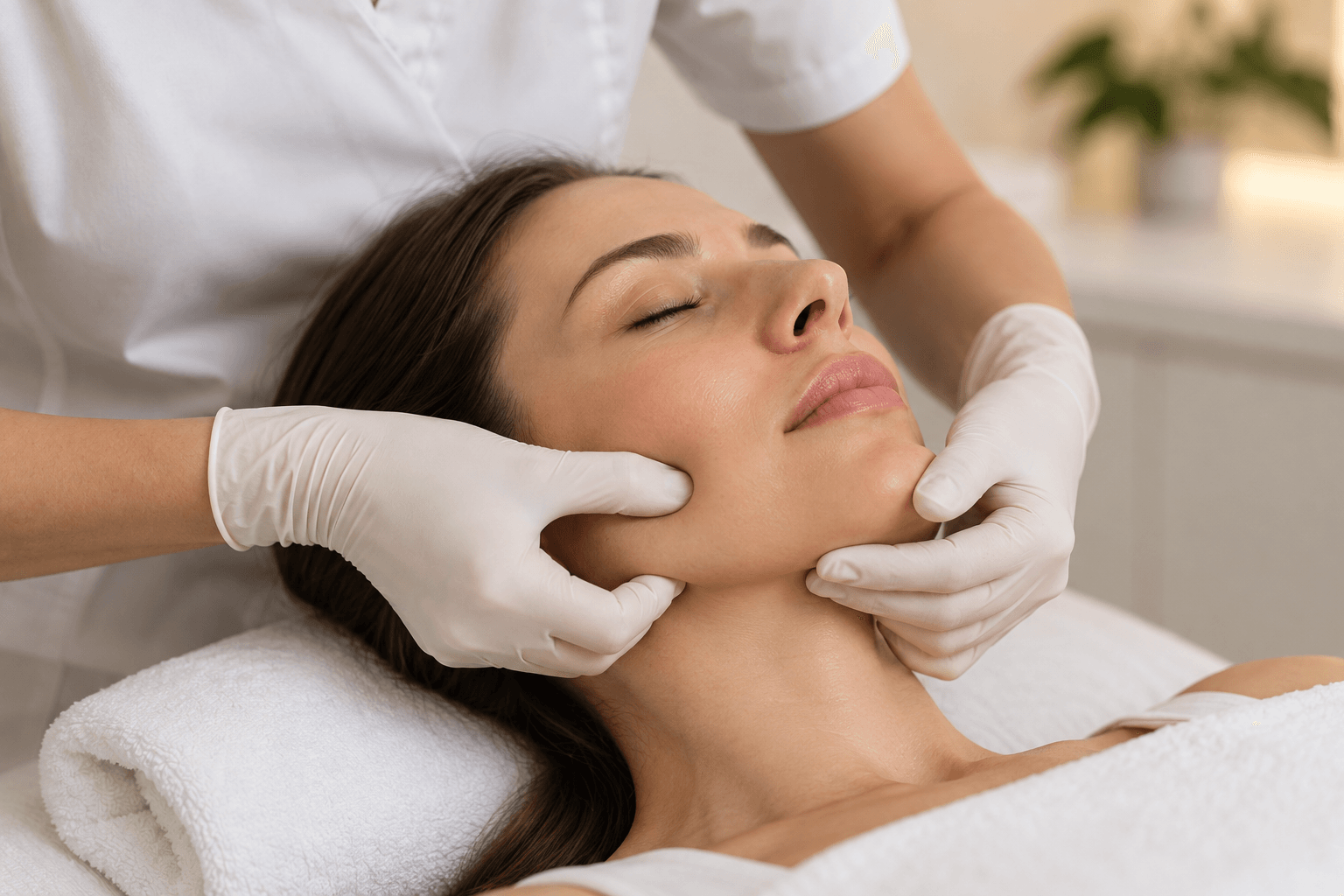
Jaw pain, facial tension and teeth clenching are not new problems. What is changing is the way we understand and manage them.
For many years, treatment for temporomandibular disorders (TMD) understandably focused on the teeth and jaw joints. These remain important, but we now recognise that the muscles and soft tissues around the jaw can also play a significant role.
This matters if you regularly wake with an aching or tired jaw, catch yourself clenching during the day, or experience facial tension that keeps returning.
It is one of the reasons Clinical Buccal Therapy™ is becoming increasingly recognised as part of a more joined-up approach to jaw and facial health. The treatment focuses specifically on the muscles and soft tissues involved in jaw movement and is delivered in partnership with dental practices nationwide, allowing it to work alongside dental care when needed.
Why Are More People Looking for Treatment for Jaw Tension and TMJ Symptoms?
Greater awareness is part of the change. More people are becoming familiar with terms such as TMD, bruxism and jaw clenching, and are beginning to connect symptoms they may previously have put down to stress, tiredness or headaches.
You might notice that your jaw feels tired when you wake up, that your cheeks or temples ache after a busy day, or that opening your mouth does not feel as comfortable as it used to. Sometimes the first sign comes from your dentist, who may notice evidence of grinding or clenching during a routine examination.
Symptoms can include:
- Jaw or facial muscle tension
- Discomfort associated with clenching or grinding
- Tension headaches
- Restricted or uncomfortable jaw movement
- Jaw clicking or locking
- Facial pain
- Muscular discomfort following lengthy dental treatment
Of course, not every headache or episode of facial pain comes from the jaw, and not every case of TMD is primarily caused by the muscles. This is why assessment is important. When muscle tension or restriction is contributing to the problem, however, addressing it can become a useful part of treatment.
Why Can TMJ Problems Involve More Than the Jaw Joint?
Patients often use “TMJ” as a general term for jaw pain. The TMJs are actually the two joints that connect your lower jaw to your skull, while TMD is a broader term for problems affecting the jaw joints, muscles and surrounding structures.
Those muscles are working throughout the day whenever you chew, speak, swallow or yawn. They may also be working when you do not realise it, particularly if you regularly clench or grind your teeth.
Some people know that they clench. Others only become aware when their dentist notices tooth wear or they start waking with a tired, aching jaw.
Over time, repeatedly tightening these muscles can leave them feeling tense, tender or restricted and may affect how comfortably the jaw moves.
This does not mean that every TMJ problem can be resolved by treating tight muscles. The jaw joint itself, dental health, previous injuries and other possible causes still need to be considered. The important point is that the muscles should be considered too.
What Is Clinical Buccal Therapy™?
Clinical Buccal Therapy™ is a clinically informed facial therapy designed to address the muscular and soft tissue components of TMJ disorder and facial tension.
The treatment combines several advanced approaches into one structured protocol, including:
- Clinical intra-oral (buccal) therapy
- Myofascial release
- Lymphatic activation and drainage
- Targeted acupressure
- Low Level Laser Therapy (LLLT)
- Structural facial rebalancing
Clinical Buccal Therapy™ is focused on how the muscles of the face and jaw are feeling and functioning. Treatment can work with deeper muscular structures associated with jaw tension and restricted movement, including areas that are difficult to reach externally.
Your treatment is also adapted according to what is found during your assessment rather than following exactly the same routine for every patient.
Why Is Intra-Oral Therapy Different From External Facial Treatment?
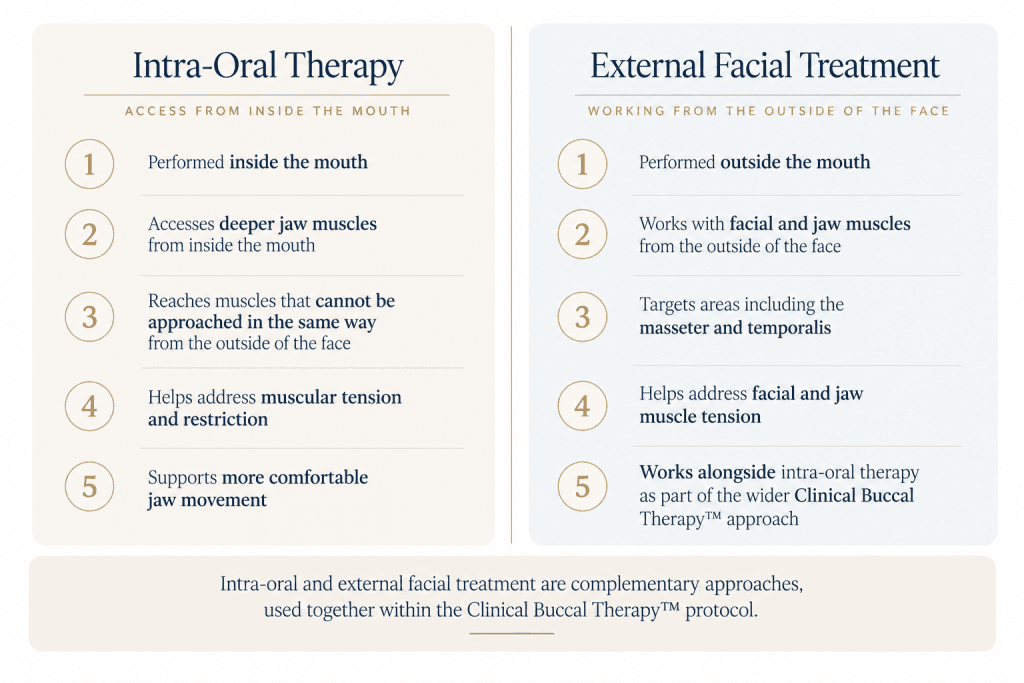
One of the distinctive features of Clinical Buccal Therapy™ is that treatment works both inside and outside the mouth. During the intra-oral stage, a trained practitioner can access deeper muscles involved in jaw movement that cannot be approached in the same way externally.
Combining intra-oral and external techniques allows the practitioner to work more comprehensively with the muscles around the jaw, helping to address tension and restriction and support more comfortable movement.
Why Combine Manual Therapy With Low Level Laser Therapy?
Clinical Buccal Therapy™ incorporates Low Level Laser Therapy (LLLT), which works differently from the hands-on parts of treatment.
The manual stages focus on releasing tension and improving movement within the muscles and surrounding soft tissues. LLLT then delivers carefully controlled laser light into the tissues to support the body’s natural cellular processes involved in recovery.
Within Clinical Buccal Therapy™, it may be used to support pain reduction, circulation and tissue repair before and after the manual stages.
This is why the different techniques are brought together within one structured protocol. In someone with significant jaw tension, for example, intra-oral therapy and myofascial release may be used to address tight or restricted areas, while lymphatic techniques can be incorporated where appropriate and LLLT used afterwards to support recovery.
Who May Benefit From Clinical Buccal Therapy™?
Clinical Buccal Therapy™ may be considered when the muscles and soft tissues around the jaw appear to be contributing to your symptoms. This can include people experiencing bruxism, persistent clenching, muscular TMD, facial tension, restricted jaw movement and tension headaches associated with jaw dysfunction. It may also be useful where the jaw muscles feel uncomfortable following a lengthy dental procedure.
What matters most is not simply whether you have been told you have “TMJ”, but what is actually contributing to your symptoms. Two people can both experience jaw pain for very different reasons. One may have significant muscle tension associated with clenching, while another may have a problem involving the jaw joint that requires further investigation.
Assessment helps establish that difference and whether Clinical Buccal Therapy™ is an appropriate part of your care.
How Does Clinical Buccal Therapy™ Work Alongside Dental Care?
Clinical Buccal Therapy™ is designed to complement appropriate dental care rather than replace it.
For example, you may already use an occlusal splint for clenching or grinding but still wake with tired, tense facial muscles. Alternatively, your jaw may feel uncomfortable after a lengthy dental procedure where your mouth has been open for a long period. In situations like these, it can be useful to consider both the dental and muscular sides of the problem.
Dentists are often among the first people to spot signs of clenching and grinding, including tooth wear, or to hear from patients who regularly experience jaw discomfort. Having access to a trained Clinical Buccal Therapy™ practitioner provides an additional pathway when the muscles and soft tissues also need attention.
Clinical Buccal Therapy™ is now delivered through selected partner dental practices nationwide, helping patients access muscular therapy alongside their wider dental care when appropriate.
Frequently Asked Questions About Clinical Buccal Therapy™
Do I need a dentist to diagnose TMD before having Clinical Buccal Therapy™?
No. Not everyone will already have a TMD diagnosis, but persistent or unexplained jaw symptoms should be properly assessed. If there are signs that your teeth, jaw joint or another condition may be contributing, further investigation may be recommended as part of your care.
How quickly should I expect my jaw to feel different?
Everyone responds differently. Some people notice changes in muscular tension or jaw movement relatively quickly, while symptoms that have been present for a long time may need a more gradual approach. Your progress should be reviewed according to how you respond. On average we find patients respond well to 3 treatments initially. These can be delivered at different intervals whether fortnightly or monthly.
Can I have Clinical Buccal Therapy™ if my jaw clicks?
In short, yes. Although a clicking jaw can have several causes. Assessment is particularly important though if the clicking is accompanied by pain, locking, a previous injury or significant difficulty opening your mouth. Please seek advice from your Dentist if this is the case.
Find Clinical Buccal Therapy™ Near You
If jaw tension, clenching, grinding or facial discomfort is becoming a regular part of your day, understanding what is contributing to it is an important first step.
Clinical Buccal Therapy™ is available through a growing network of selected partner dental practices across the UK, making it easier to access treatment within a clinical setting and alongside your existing dental care where appropriate.
You can find your nearest Clinical Buccal Therapy™ practitioner and arrange a consultation to discuss your symptoms, whether treatment may be suitable for you and the most appropriate next step.
