
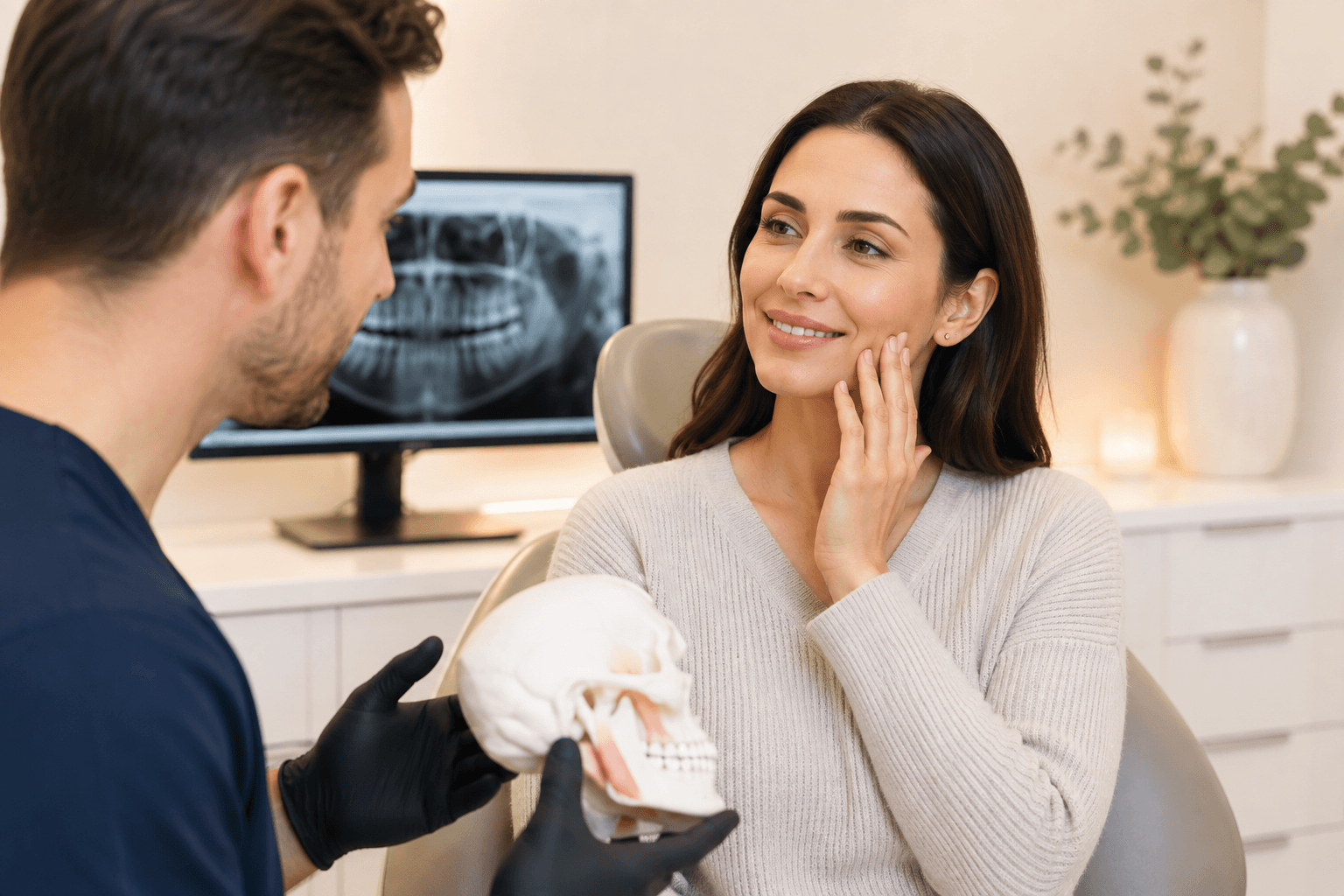
Most people associate tooth pain with problems such as decay, infection or a cracked tooth. While these are common causes of dental discomfort, they are not the only explanation.
The muscles that move the jaw are active throughout the day, whether you’re eating, speaking, swallowing or even concentrating. Like any other muscles in the body, they can become overworked, leading to tightness, fatigue and pain. When this happens, the discomfort isn’t always felt where it begins. Instead, tight jaw muscles can refer pain into the teeth, cheeks, temples and ears, making muscular tension feel surprisingly similar to toothache.
Understanding how facial muscle tension affects dental comfort is becoming increasingly important. Rather than viewing the teeth in isolation, clinicians now recognise that the teeth, jaw joints, muscles and surrounding soft tissues all work together. When one part of this system is under strain, it can affect the others.
Can facial muscle tension cause tooth pain?
Yes. One of the most confusing aspects of facial muscle tension is that it can create pain that feels as though it is coming directly from a tooth.
This happens because the muscles of the face and jaw share nerve pathways with many of the structures inside the mouth. The trigeminal nerve, which provides sensation to the face, teeth and jaw, carries signals from several different tissues. As a result, the brain does not always identify the exact source of the pain. Instead, discomfort arising from an overworked jaw muscle may be interpreted as tooth pain, even when the teeth themselves are healthy.
This is known as referred pain. Unlike pain caused by decay or infection, referred muscular pain is often unpredictable. It may only appear when chewing, after long periods of concentration or first thing in the morning following overnight clenching. The discomfort may also seem to move between different teeth or areas of the jaw, making it much harder to identify the true cause.
Which facial muscles are involved?
Several muscles work together every time the jaw opens, closes and moves from side to side.
The masseter muscles, located at the sides of the jaw, generate much of the force needed for chewing. The temporalis muscles over the temples help lift and stabilise the jaw, while deeper muscles inside the face control more complex movements.
Because these muscles are constantly in use, prolonged contraction can gradually lead to fatigue, tightness and discomfort.
Common causes of jaw muscle tension include:
- Daytime clenching
- Night-time grinding (bruxism)
- Emotional stress
- Jaw injuries
- Changes in the bite
- Prolonged computer work and poor posture
- Compensating for painful or missing teeth
Over time, small areas of increased sensitivity, known as trigger points, can develop within the muscles. These trigger points may refer pain into nearby teeth, the gums, cheeks or temples, explaining why someone may experience ongoing dental discomfort despite repeated examinations showing healthy teeth.
Why doesn’t the pain always match the problem?
Pain arising from muscles behaves differently from pain originating within a tooth. A damaged tooth usually produces symptoms that can be linked to a specific trigger, such as biting pressure, hot or cold drinks, or sweet foods. Muscular pain is often far less predictable and may fluctuate from one day to the next.
People commonly describe:
- A dull ache affecting several teeth
- Teeth that feel tender when biting despite appearing healthy
- Facial aching that spreads across one side of the jaw
- Morning stiffness around the jaw
- Headaches alongside jaw discomfort
- Symptoms that come and go without an obvious cause
These changing symptoms are often an important clue that facial muscle tension may be contributing to the discomfort. For this reason, a thorough assessment considers whether symptoms are arising from the teeth, the jaw joints, the surrounding muscles or a combination of all three.
How can facial muscle tension affect your jaw and dental treatment?
Facial muscle tension can affect both the comfort of dental treatment and the way the jaw functions.
Holding your mouth open for an extended period places the jaw muscles under continuous stretch. If those muscles are already tight or fatigued, even routine dental procedures may become uncomfortable. Longer appointments, such as root canal treatment or multiple fillings, can sometimes leave the jaw feeling temporarily stiff or achy, reflecting the additional strain placed on already overloaded muscles rather than a problem with the dental treatment itself.
Facial muscle tension does not always mean you have a temporomandibular joint (TMJ) disorder, but the two are closely linked and frequently occur together. Tight jaw muscles can alter the way the jaw moves, increasing pressure on the joints, while irritation within the TMJ can cause the surrounding muscles to tighten in an attempt to protect the joint. This cycle can contribute to ongoing jaw discomfort and restricted movement.
Because symptoms can arise from the teeth, jaw joints, muscles or a combination of all three, a thorough assessment is essential before treatment is recommended. This usually includes evaluating:
- Jaw movement and range of motion
- Muscle tenderness and referred pain
- Jaw joint function
- Clenching or grinding habits
- Previous dental treatment
- Bite function where appropriate
Understanding how these factors interact helps identify the underlying cause of your symptoms and ensures that treatment is tailored to your individual needs.
What Is Clinical Buccal Therapy™?
Clinical Buccal Therapy™ is a clinically informed facial therapy designed to address the muscular and soft tissue components of TMJ disorder and facial tension.
The treatment combines several advanced approaches into one structured protocol, including:
- Clinical intra-oral (buccal) therapy
- Myofascial release
- Lymphatic activation and drainage
- Acupressure techniques
- Low Level Laser Therapy (LLLT)
- Structural facial rebalancing
Rather than focusing solely on where pain is felt, Clinical Buccal Therapy™ considers how the muscles of the face, jaw and surrounding soft tissues work together to support comfortable jaw movement and function.
One of the key differences from conventional facial massage is the use of clinical intra-oral techniques. Accessing the muscles from inside the mouth allows areas that cannot be effectively reached externally to be treated where clinically appropriate. This provides a more comprehensive approach to releasing tension within the muscles responsible for chewing and jaw movement.
The treatment may also incorporate myofascial release to reduce soft tissue restrictions, lymphatic activation to support tissue health, and Low Level Laser Therapy (LLLT), where appropriate, to complement the wider treatment plan.
How is facial muscle tension usually treated?
There is no single treatment that is right for everyone. The most appropriate approach depends on the underlying cause of your symptoms and whether facial muscle tension is the main issue or part of a wider TMJ disorder.
If facial muscle tension is identified as the primary cause, treatment may include:
- Clinical Buccal Therapy™ to reduce muscle tension and improve jaw function
- Advice on recognising and reducing habits, such as daytime clenching, that may be placing unnecessary strain on the jaw
If other factors are contributing, your treatment plan may also include:
- An occlusal splint provided by your dentist
- Jaw rehabilitation exercises to improve movement and muscle control
- Follow-up appointments to monitor your progress
These approaches are often used together, with each supporting a different aspect of jaw health.
Facial muscle tension often develops gradually, so addressing symptoms early can help prevent ongoing muscle overload and compensatory movement patterns. If your symptoms include persistent jaw locking, significant restriction in jaw movement, a recent injury or signs of an underlying joint condition, further investigation or referral to another healthcare professional may be recommended before treatment begins to ensure you receive the most appropriate care.
Frequently Asked Questions
Can facial muscle tension come and go?
Yes. Facial muscle tension often fluctuates depending on factors such as stress, clenching habits, posture and how much the jaw has been used. Some people notice symptoms only after long periods of talking, chewing or concentrating, while others experience discomfort more consistently.
Why does tooth pain disappear without dental treatment?
If the discomfort is coming from the surrounding muscles rather than the tooth itself, it may improve as the muscle tension settles. However, because tooth pain can also be caused by dental disease, any new or persistent pain should always be assessed by a dentist first.
Can poor posture contribute to facial muscle tension?
Yes. The muscles of the jaw, neck and shoulders work closely together. Spending long periods looking down at a phone or working at a computer can alter head and neck posture, increasing strain on the muscles that help support jaw movement.
How do I know if my tooth pain is coming from a muscle or a tooth?
It isn’t always possible to tell without an assessment. Pain caused by a tooth is often linked to triggers such as hot, cold or biting pressure, whereas muscular pain is more likely to vary throughout the day, spread across a wider area or feel worse after clenching, chewing or prolonged jaw use.
Can facial muscle tension return after treatment?
It can, particularly if the underlying causes such as clenching, grinding or prolonged muscle overload continue. Ongoing self-awareness, good jaw habits and following any advice provided as part of your treatment plan can help reduce the likelihood of symptoms returning.
Find Out if Clinical Buccal Therapy™ Could Help
If you’re experiencing ongoing facial muscle tension, jaw discomfort or tooth pain without an obvious dental cause, the first step is to get in touch. We can discuss your symptoms, answer your questions and help you find your nearest partner dental practice offering Clinical Buccal Therapy™.
Every patient is different, so any treatment recommendations are based on a comprehensive assessment of your symptoms, jaw function and overall oral health.
Contact us to learn more about Clinical Buccal Therapy™ or to find your nearest treatment location.
