
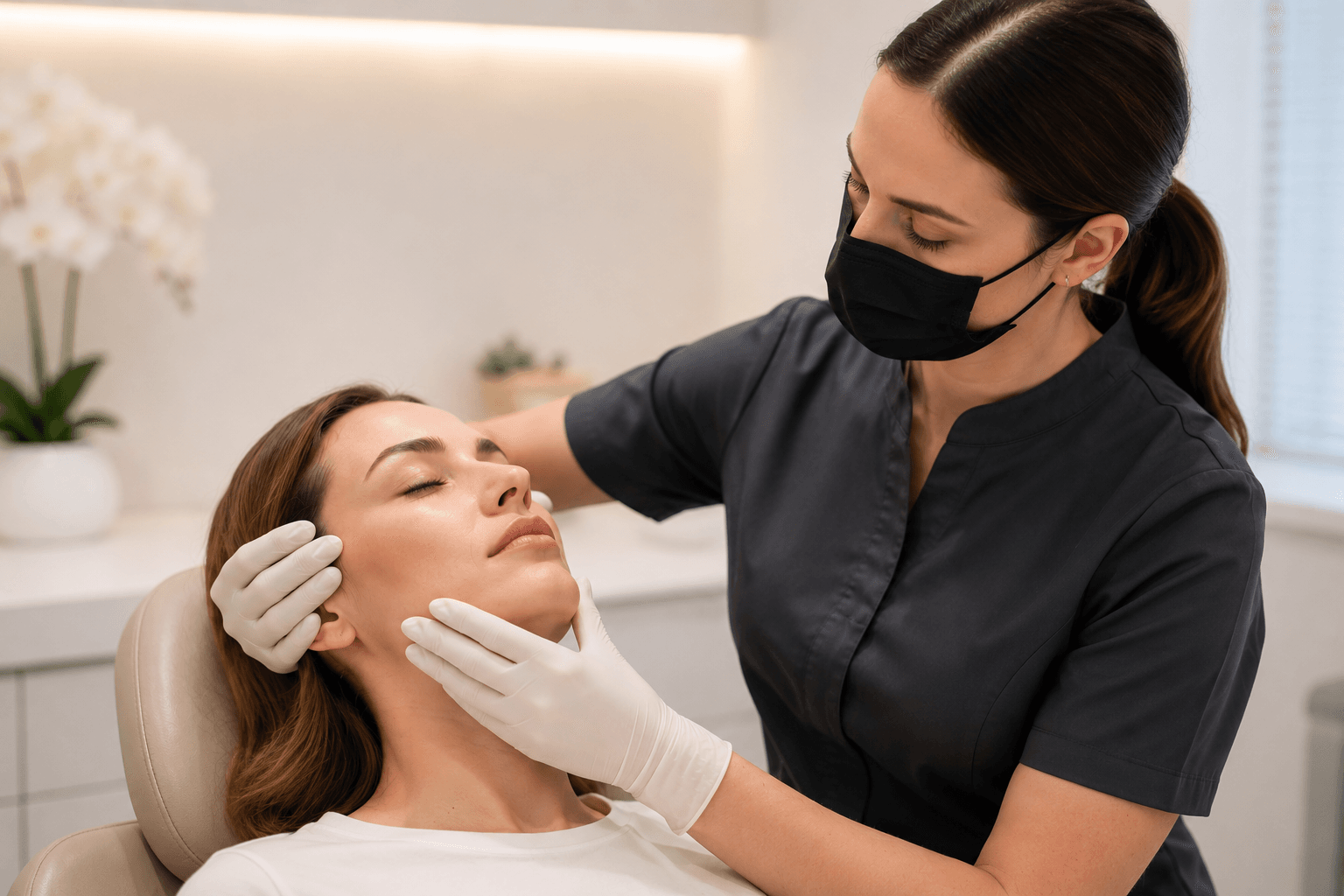
Jaw symptoms can sometimes return even when appropriate dental care is already in place. A patient may be wearing their splint consistently and have no new concerns with their teeth, yet still notice familiar jaw tension, facial aching or morning fatigue. Understanding why symptoms are recurring can help both patients and dental teams decide what support may be needed next.
Patients often use “TMJ” as a general term for discomfort around the jaw, cheeks or temples. In reality, temporomandibular disorders (TMD) can involve the jaw joints, the muscles responsible for jaw movement and surrounding structures. Some presentations are predominantly muscular, while others involve the joint or a combination of factors.
Identifying which structures are contributing can make management much more targeted. Where muscular TMD forms part of the picture, addressing muscle tension and function alongside appropriate dental care can provide a more complete approach to managing recurring symptoms.
Why do TMJ symptoms keep coming back?
The muscles responsible for chewing generate considerable force. Repetitive clenching, teeth grinding and prolonged muscle overactivity can increase resting muscle tone, placing additional strain on the jaw and surrounding tissues.
Over time, patients may notice:
- aching or tightness through the jaw and cheeks
- morning jaw fatigue
- tension around the temples
- headaches associated with jaw tension
- reduced or uncomfortable mouth opening
- symptoms that worsen after prolonged chewing
Some patients know they grind their teeth at night. Daytime clenching can be harder to recognise and may happen while concentrating, driving or working.
If these patterns continue, the muscles can repeatedly be overloaded. This is why managing recurring muscular TMD involves looking beyond the current episode of pain and considering what may be maintaining it.
Is TMJ pain always a problem with the joint?
Although the temporomandibular joints sit just in front of the ears, symptoms in this area can also arise from the muscles involved in chewing and jaw movement. A patient with muscular TMD may experience facial aching, muscle tenderness, headaches or restricted movement without significant joint symptoms. However, jaw pain should not automatically be assumed to be muscular. Dental causes, joint pathology and other sources of facial pain need to be considered appropriately.
Persistent locking, significant restriction of movement, recent trauma or signs of joint pathology require further investigation or referral rather than simply repeating muscular treatment.
For both patients and dental teams, establishing what is causing the symptoms is the starting point for appropriate care.
What Is Clinical Buccal Therapy™?
Clinical Buccal Therapy™ is a clinically informed facial therapy designed to address the muscular and soft tissue components of TMJ disorder and facial tension.
The treatment combines several advanced approaches into one structured protocol, including:
- Clinical intra-oral (buccal) therapy
- Myofascial release
- Lymphatic activation and drainage
- Targeted acupressure
- Low Level Laser Therapy (LLLT)
Clinical Buccal Therapy™ is most relevant when assessment identifies a muscular component. It is not a treatment for every cause of TMJ pain and does not replace appropriate dental investigation or referral where required.
Why is clinical intra-oral therapy different?
Clinical intra-oral therapy is the foundation of Clinical Buccal Therapy™.
Several muscles involved in chewing and jaw movement lie deep within the cheek and behind the jaw, making them inaccessible using external techniques alone.
Using medical-grade gloves and strict infection control procedures, the practitioner gently works within the mouth to assess and treat relevant muscular structures. External techniques are used alongside this to address the wider muscles and soft tissues around the face and jaw.
Rather than being a standalone treatment, intra-oral therapy forms one part of a structured, evidence-informed approach to restoring healthier muscle function. The aim is not simply temporary relaxation. For appropriate muscular TMD presentations, treatment focuses on reducing excessive muscular tension and supporting more comfortable jaw movement.
How does Clinical Buccal Therapy™ work?
Muscular TMD does not always involve one isolated area, which is why Clinical Buccal Therapy™ combines several complementary techniques.
Myofascial release addresses muscular and fascial restriction around the face and jaw, while lymphatic activation and drainage and targeted acupressure form part of the wider protocol according to the patient’s presentation.
Low Level Laser Therapy (LLLT) is also incorporated as an adjunct to the manual stages of treatment.
The individual elements are not intended to function as separate treatments. Together, they allow the practitioner to take a broader approach to the muscular and soft tissue components identified during assessment.
Can Clinical Buccal Therapy™ be combined with dental treatment?
Yes. In practice, this is often where Clinical Buccal Therapy™ fits most naturally.
TMD can be multifactorial, so one treatment may not address every contributing factor. A patient with bruxism, for example, may require an occlusal splint as part of their dental management while receiving Clinical Buccal Therapy™ to address associated muscular tension.
For milder cases, management may begin with education around clenching habits alongside appropriate muscular treatment. Where symptoms are more established, the wider plan may also involve an occlusal splint, jaw rehabilitation exercises and ongoing monitoring by the dentist.
Treatment choice should always reflect the individual presentation rather than following a fixed formula.
Can muscular TMD make dental appointments uncomfortable?
Keeping the mouth open during a longer dental procedure can place additional demand on muscles that are already tense or fatigued. Patients with restricted jaw movement may find this particularly uncomfortable and sometimes notice increased muscular soreness afterwards.
This is useful information for the dental team. If a patient struggles to maintain comfortable opening, appointments can be planned with their symptoms in mind. Where muscular restriction is contributing, addressing muscle function may also support more comfortable jaw movement as part of the patient’s wider dental care.
What can patients do to help prevent recurring jaw tension?
One of the most useful steps is becoming aware of unnecessary jaw activity. Daytime clenching is easily missed. Patients may find that their teeth remain together while concentrating or working, even though the jaw does not need to be held this way at rest.
It can also help to notice when symptoms occur. Morning discomfort may suggest a different pattern from tension that gradually develops during the working day. These observations can provide useful information during dental and Clinical Buccal Therapy™ assessments and help identify factors that may repeatedly overload the muscles.
How can dental practices reduce repeat TMJ complaints?
The aim should not simply be to stop a patient returning. TMD symptoms can fluctuate, and some patients require ongoing management. A better goal is to ensure that when symptoms recur, there is a clear pathway.
For dental teams, this means distinguishing between dental, muscular and joint-related presentations rather than treating “TMJ” as one condition.
Where muscular TMD is identified, Clinical Buccal Therapy™ can provide a targeted treatment pathway alongside appropriate dental care. Where a splint is indicated, it remains part of management. Where habits such as clenching are contributing, patient education becomes important. Where the presentation suggests joint pathology or another cause, further investigation takes priority.
For patients, this provides something equally valuable: a clearer explanation of why their symptoms may be returning and what can appropriately be done about them.
Frequently Asked Questions About TMJ
Can you have muscular TMD without jaw clicking?
Yes. Muscular TMD can present as aching, tightness, facial fatigue, headaches or uncomfortable jaw movement without clicking or other obvious joint sounds.
Can TMJ problems feel like toothache?
Pain from the jaw muscles can sometimes be felt in nearby areas, but toothache has many possible dental causes. New or persistent pain should therefore be assessed rather than assumed to be muscular.
Why does my jaw feel tighter when I am stressed?
Some people increase jaw muscle activity or clench their teeth during periods of concentration or stress without noticing. Repeated muscle activity may make existing muscular symptoms more noticeable.
Can TMJ symptoms affect just one side?
Yes. Muscular tension does not have to develop equally on both sides of the face. Some patients experience predominantly one-sided symptoms.
Does recurring TMJ pain mean my condition is getting worse?
Not necessarily. Muscular symptoms can fluctuate according to clenching, grinding, jaw use and other factors. A significant change in the nature of the symptoms should, however, be reassessed.
A More Complete Approach to Recurring TMJ Symptoms
Repeat TMJ complaints are easier to manage when the focus moves away from treating “TMJ” as one problem and towards identifying what is actually contributing to each patient’s symptoms.
For some patients, dental management will be central. For others, muscular overactivity and restriction may form a significant part of the presentation. More complex symptoms may require further investigation.
Clinical Buccal Therapy™ provides an additional pathway for appropriate muscular TMD presentations, working alongside dental assessment, occlusal splints, patient education, rehabilitation and monitoring where indicated.
Clinical Buccal Therapy™ is available at partner dental practices nationwide. Patients can find their nearest participating practice to discuss recurring jaw tension or muscular TMD symptoms, while dental practices can enquire about introducing Clinical Buccal Therapy™ as part of their existing TMD pathway.
